
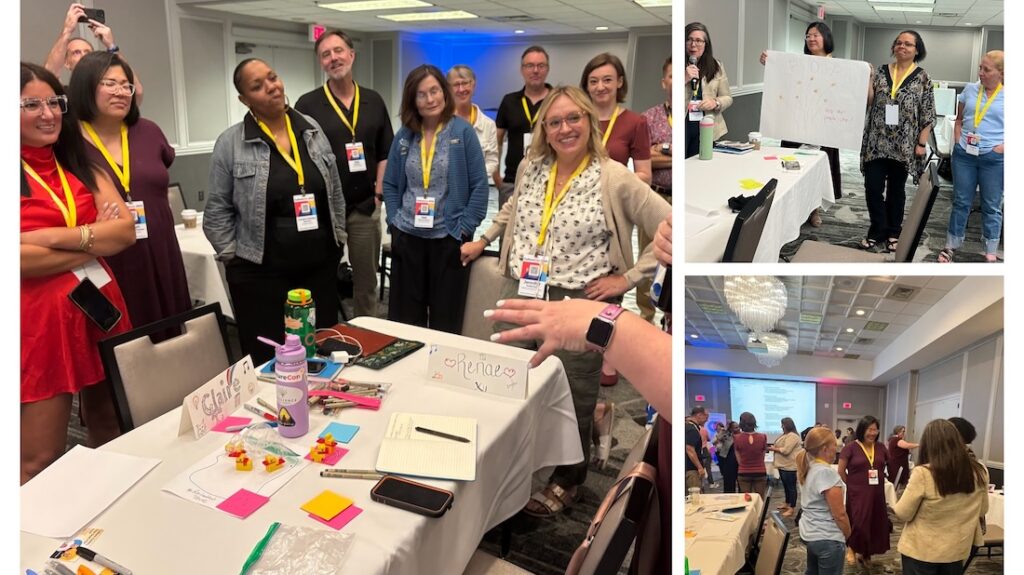
You have a topic you know well: leadership, coaching, innovation, design thinking, agile ways of working, a growth or innovation mindset, or a new strategy. You have been asked to train people on it, and the easy path is a slide deck and a Q&A at the end. This guide is for trainers, managers, subject matter experts, and L&D teams who want to turn that topic into an interactive workshop instead, one where participants practice, decide, and create something they will use the following week. You do not need to become a design thinking expert to do it. You need a different starting question and a handful of reliable activity patterns. The same approach works for more technical subjects like compliance and safety, too.
Start With What People Should Do, Not What You Should Cover
Most training begins with a content outline: the ten things the expert wants people to know. An interactive workshop begins with the change you want to see after the session. Write one sentence that finishes this phrase: “After this workshop, participants will be able to…” Then write what they will have in their hands when they leave, such as a plan, a decision, a practiced skill, or a draft they can finish on Monday.
A leadership development team planning a session on coaching conversations might start with twelve slides of coaching models. Reframed, the outcome becomes “Each manager can hold a five-minute coaching conversation using open questions, and can name the habit that most often turns their coaching into telling.” That single sentence changes the whole design, because the session now needs time for managers to practice with each other and to talk about where coaching breaks down in a busy week.
Cut Your Content to the Essentials
Once the outcome is clear, go back through your material and sort it into three piles: what participants must hear from you, what they can discover themselves through an activity, and what they can read later. Most experts find that the first pile is about a third of what they planned to present. The second pile becomes your activities. The third becomes a one-page handout or a follow-up email.
This step is hard for people who know their subject deeply, because every detail feels important. A useful test is to ask whether a participant would make a worse decision next week without that point. If the answer is no, move it to the handout. The time you free up is what makes interaction possible.
Turn Content Into Activities People Can Do
Every piece of content you keep can be delivered as an activity instead of a lecture. A few patterns work for almost any topic:
- Think, pair, share. Ask a question, give people a minute to write their own answer, then have pairs compare before anyone speaks to the full group. Everyone participates, including the quiet people.
- Case or scenario rounds. Give small groups a realistic situation from your topic and ask them to decide what to do. Debrief the differences between groups.
- Sort and rank. Put options, risks, or ideas on cards and have tables sort them. The conversation about why one card belongs above another is where the learning happens.
- Teach back. Assign each table one part of the content to read for five minutes, then teach it to the room in two minutes.
- Build or draft. Have people create a real output during the session: a checklist, a message to their team, a prototype, or a first draft of a plan.
For an agile training, this might mean replacing a slide listing the principles of the Agile Manifesto with three short scenarios drawn from real projects: a stakeholder who wants every feature at once, a team skipping its retrospective, a plan that changes halfway through a sprint. Tables decide what they would do, compare answers, and then look at the principles as a way of naming what they already discovered. You can find more options in our guide to experiential, participant-focused facilitation methods.
Design the Rhythm of the Session
An interactive workshop alternates between different ways of working. A reliable rhythm is individual thinking, then pairs or small groups, then the full room, then back again. Keep your own input segments short, around 10 minutes at most, and follow each one with something participants do with it. People can listen for a while, but they learn when they use the idea.
Here is how a 90-minute session introducing design thinking to a leadership team might flow:
- 0 to 10 minutes: Opening question in pairs: “Think of a product or service you love. What did the people who designed it understand about you?”
- 10 to 20 minutes: Short input on the design thinking process and why it starts with people rather than solutions.
- 20 to 45 minutes: Paired empathy interviews on a real challenge the team faces, such as onboarding new hires or running better meetings.
- 45 to 60 minutes: Tables turn what they heard into a problem statement, then a gallery walk to compare them.
- 60 to 80 minutes: Rapid brainstorming and a quick paper prototype of one idea per table.
- 80 to 90 minutes: Reflection and one place each leader will try the approach in the next month.
Shift From Presenter to Facilitator
The biggest change for most subject matter experts is their own role. As a presenter, your job is to explain clearly. As a facilitator, your job is to set up good questions, keep time, listen for what groups are discovering, and connect their insights back to the content. You will talk less and structure more. We have written about this change in From Presenter to Facilitator, and it is the core skill our facilitation workshop builds. For the in-the-room moves, see our guide on how to facilitate a workshop.
A practical habit is to write your facilitator notes as questions rather than statements. Instead of “Explain why most new ideas stall,” write “Ask: Where have good ideas stalled on your team?” Groups will usually name the same points you would have made, and they will remember them because they said them.
Make It Stick With Reflection and Next Steps
The last ten minutes decide whether anything changes after the session. Build in time for each person to reflect on what they learned and name one specific thing they will do, with a date. Ask them to share it with a partner, which makes it far more likely to happen. Our guide to reflection activities for workshops has more ways to close a session well.
Then plan one small follow-up: an email a week later asking how the first attempt went, or a short check-in at the next team meeting. Training that ends when the room empties tends to fade within days. A single reminder keeps the new behavior alive long enough to become a habit.
Test a Small Version Before the Real Session
Treat your first design as a prototype. Run one activity with three or four colleagues and watch where they get confused, where they get energized, and how long it actually takes (usually longer than you planned). Adjust the instructions, cut what drags, and give the best activities more time. This quick test is the difference between a workshop that looks good on paper and one that works in the room.
Get Help Designing Your Workshop
If you have an important session coming up, you do not have to design it alone. Our workshop design and facilitation coaching works one-to-one on the workshop you need to lead, on any topic. The innovative facilitator training program builds these skills over time with online workshops and coaching. For groups of trainers or leaders, we can bring a facilitation workshop to your organization.
Leading sessions in higher education? Our companion guide on UniversityWebinars.org covers how to turn a lecture or webinar into an interactive session.
What is the topic you teach that would come alive if participants did more of the work? Tell us about it, and we will suggest where to start.